Lim Ju Xu's Coding Projects
Hi, I'm Ju Xu and I am 12 years old this year. I started learning robotics with the Lego Mindstorms together with block-based coding when I was in Primary 4. I enjoy working on different structures and robots, designing and building them to automate routine daily tasks in my life Beyond honing my python fundamentals, I wanted to create games that was beneficial to students. I leant how to use Pygame and created different games that my friends could compete and challenge one another. I have documented my journey in robotics, coding, Innovation and STEM.
Bumper Car
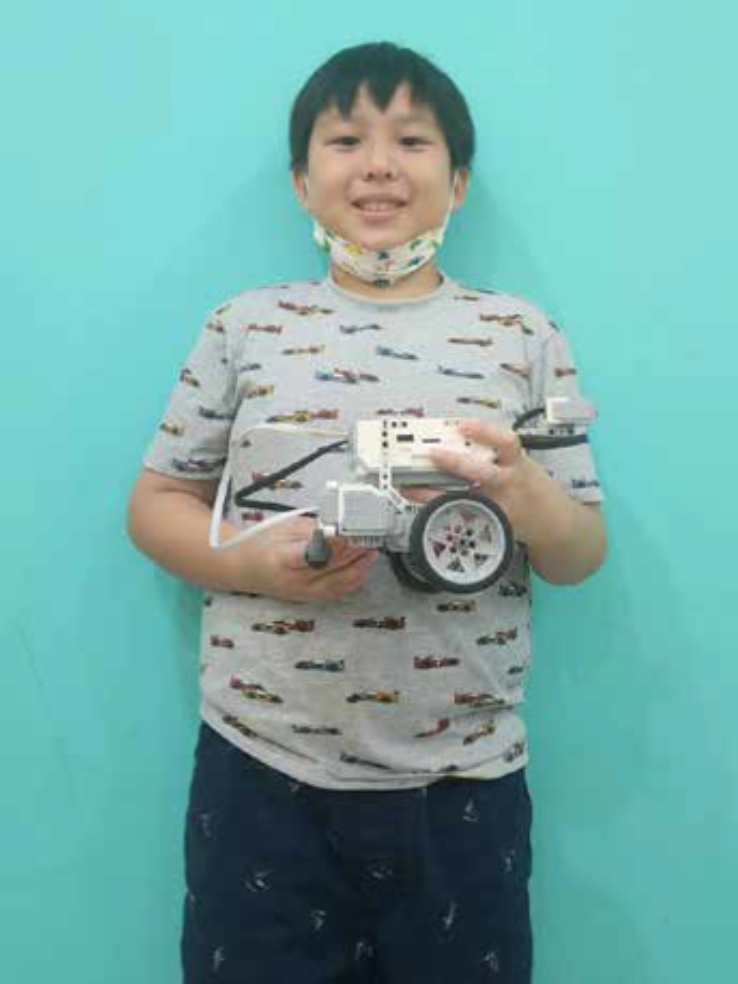
I learned how to use LEGO Technic parts to design and build functional mechanical systems. By applying coding concepts such as conditionals (if-else) and integrating various sensors, I programmed my creations to respond dynamically to their environment. One example was a bumper car that automatically reverses when its front touch sensor detects a collision—mimicking real-world applications of obstacle detection used in autonomous vehicles and robotic systems to enhance safety and navigation.
2 touch activated gripper
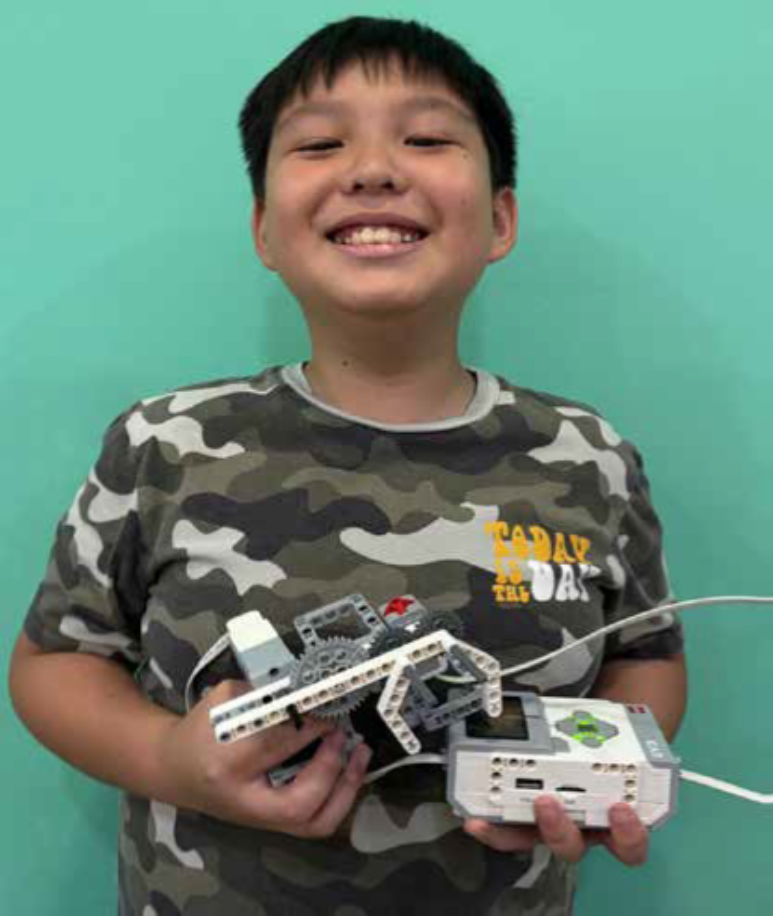
Having played at the arcade frequently, I decided to apply the same concepts and design principles to create a robotic gripper that opens and closes only when a touch sensor is activated. This mechanism allows for precise control, mimicking the arcade claw machine’s motion. Beyond recreation, this design has real-world applications — such as in assistive robotics, where touch-sensitive grippers can help individuals with limited mobility pick up and release objects safely, or in industrial automation, where the system can handle delicate components without causing damage. By integrating touch-based activation, the gripper combines fun design inspiration with practical functionality for real-world use.
Colour And Distance Sensor Activated Windmill
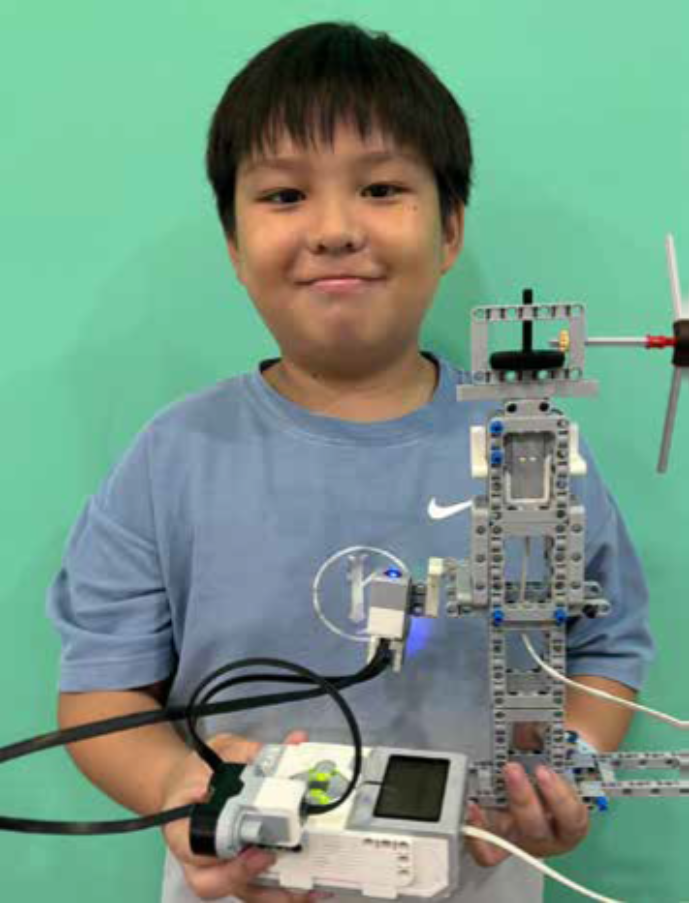
I developed a motorized, sensor-activated windmill designed to minimize the need for manual operation. The system automatically activates when a person approaches, ensuring smooth and efficient startup. It features a color-sensing mechanism that halts operation only when two specific colors are detected—an intentional safeguard managed by an authorized operator to prevent unauthorized interference or tampering.
Follow The Line
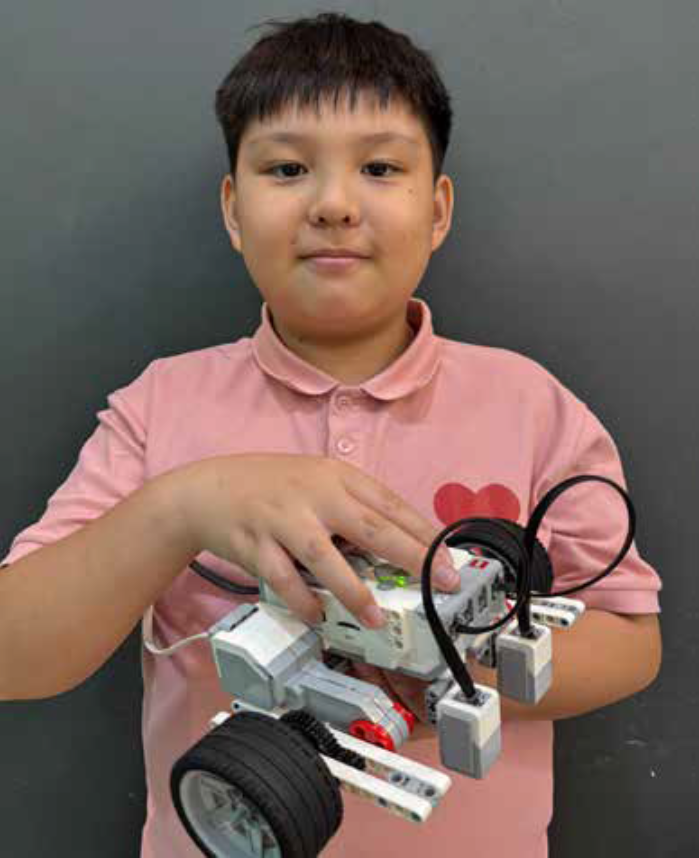
Inspired by a line-following robot I observed at the library—used to transport books from the return bin to the sorting section—I decided to design a similar robot for home use. My version is programmed to follow a black line on the floor, allowing it to navigate efficiently through designated areas that require cleaning.
Touch Activated Treadmill
As someone who enjoys exercising on a treadmill, I decided to recreate an automated treadmill using LEGO Technic parts. This miniature version functions similarly to a real treadmill—its speed is controlled by user input. With the use of a touch sensor, and coding concepts such as variables and if-else statements, the treadmill increases speed with each press—just like speed adjustments on a real gym machine.

Description:
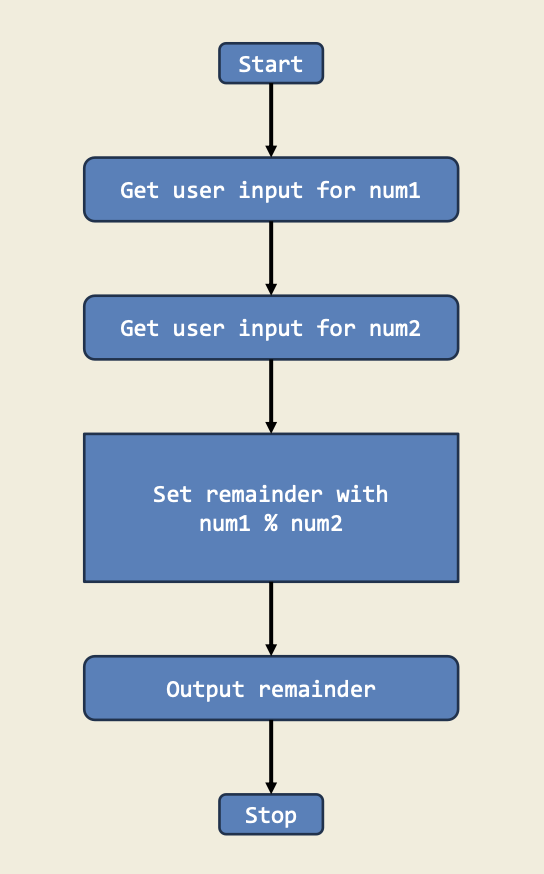
This project shows how to calculate the remainder when one number is divided by another. It’s a great way to practice using arithmetic and the modulo operator (%).
Diagram:
Trinket:
Description:
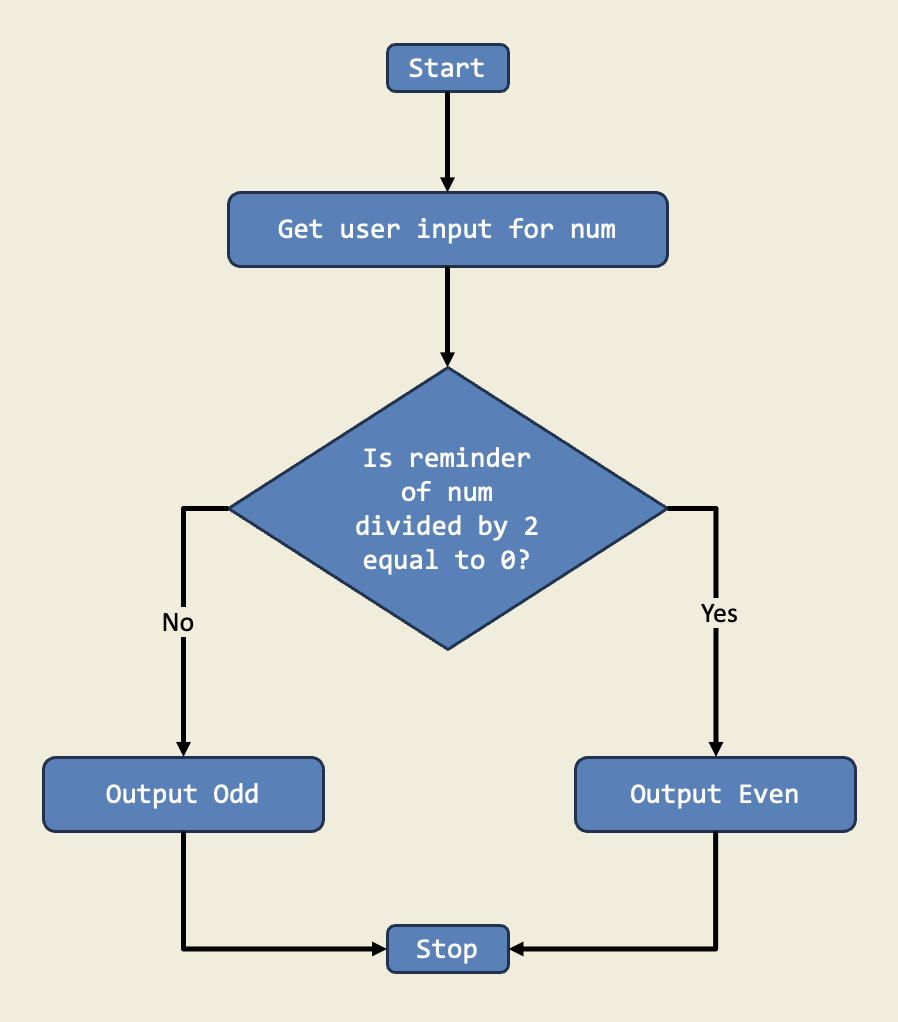
In this project, I designed a program that checks if a number is even or odd using if-else statements. This project teaches me how to make decisions in code based on conditions.
Diagram:
Trinket:
Description:
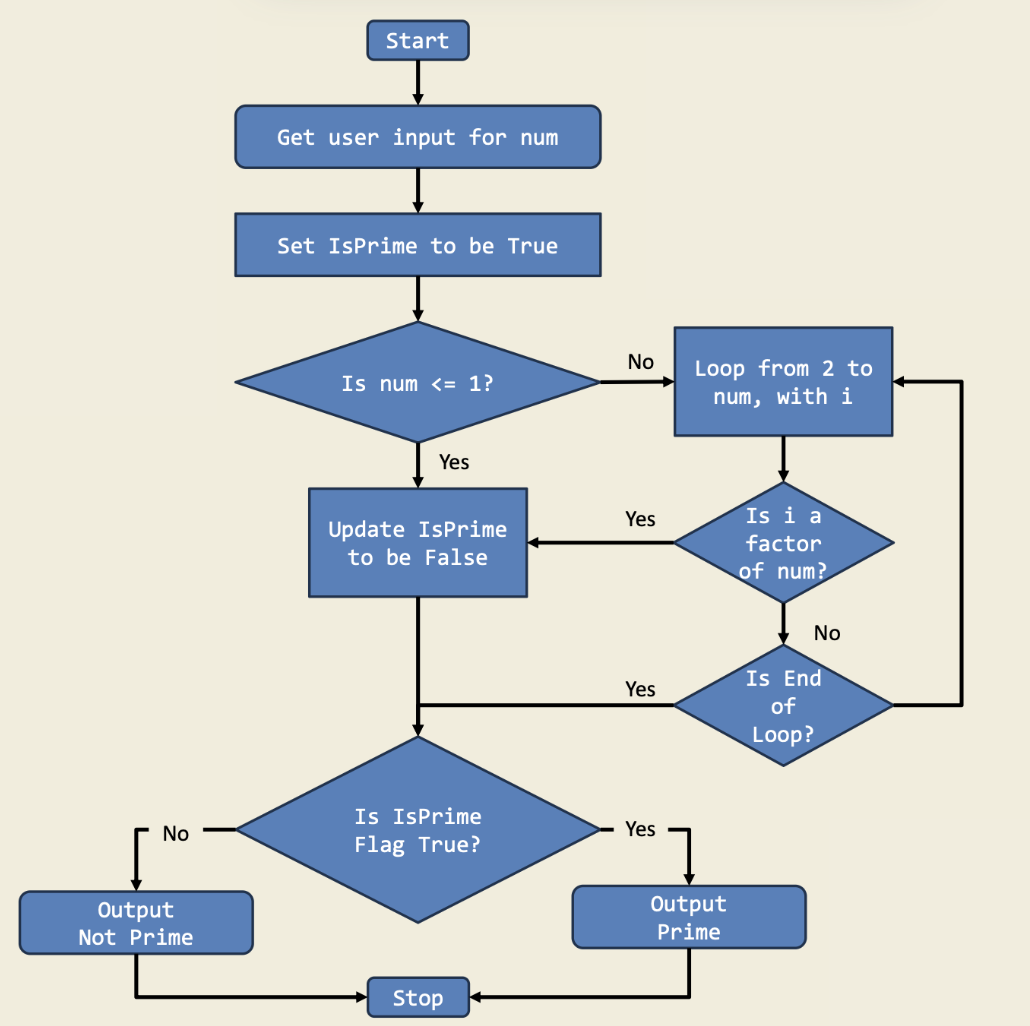
This game challenges you to decide if a number is prime by using if-else statements. It’s a fun way to reinforce the concept of prime numbers and divisibility in code.
Diagram:
Trinket:
Description:
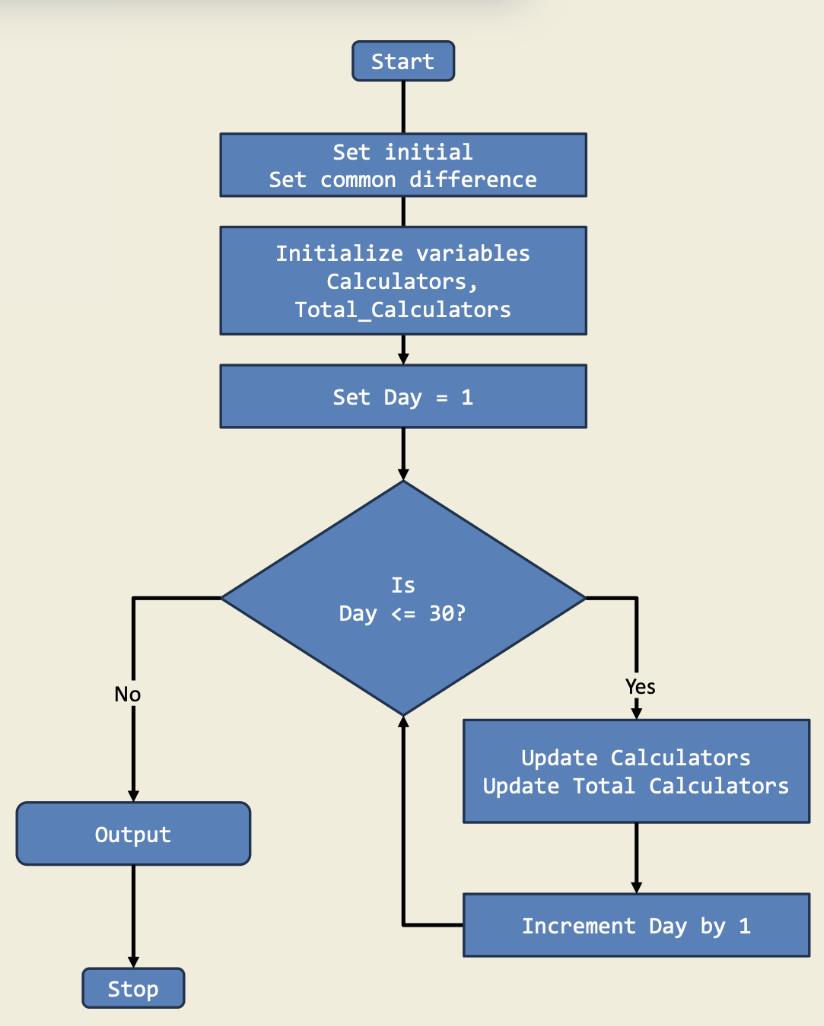
In this project, I tracked the production rate of a calculator factory that follows an arithmetic progression. I calculated the number of calculators produced on day 30 and the total after 30 days. This shows how loops can handle repeated calculations for real-world scenarios.
Diagram:
Trinket:
Description:
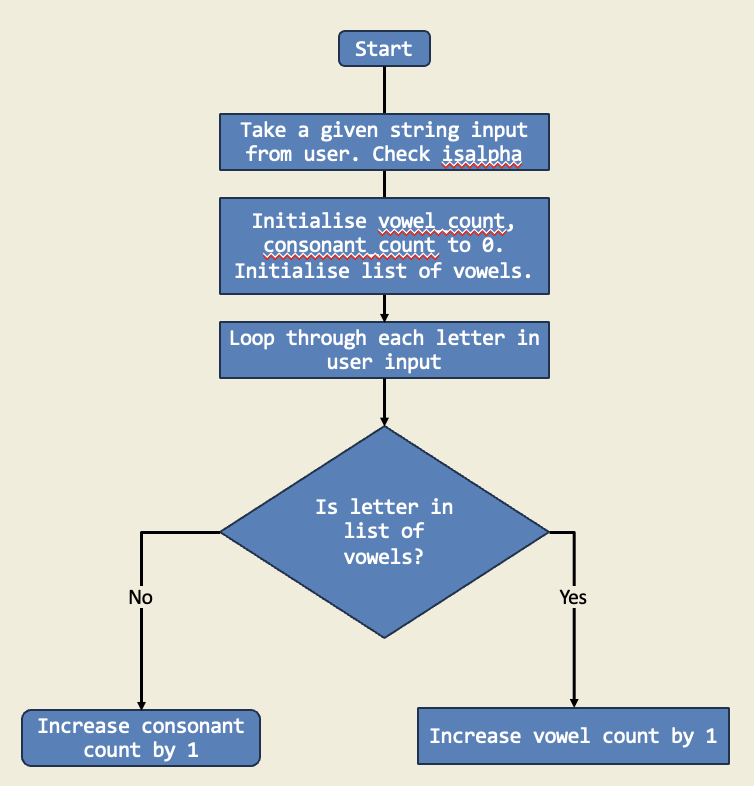
In this project, I used a for loop to count the number of vowels and consonants in a given string. The loop iterates through each character in the string, checking if it is a vowel or consonant, and updates the counts accordingly.
Diagram:
Trinket:
Students learn to use list, for loops and range to iterate over multiple sequences. This includes datatypes in a list, empty list, list methods, growing a list, accessing list elements with positive and negative index, modifying list, for loops with range, loop control with break and continue.
Description:
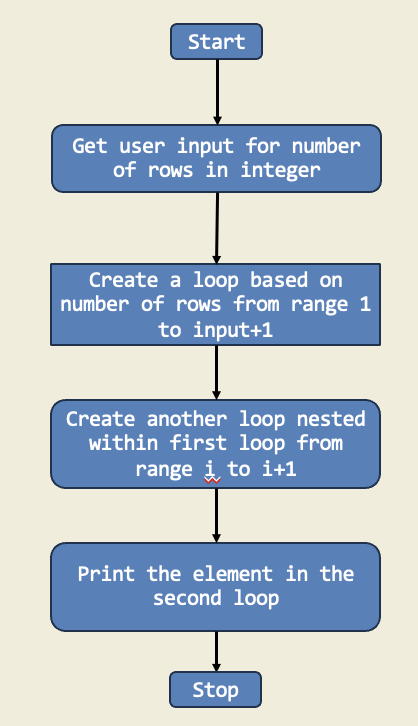
In this project, I created a number pyramid using nested for loops. The outer loop controls the number of rows, while the inner loop prints the numbers in each row. This project demonstrates how to use loops to create patterns and shapes in Python.
Diagram:
Trinket:
Description:
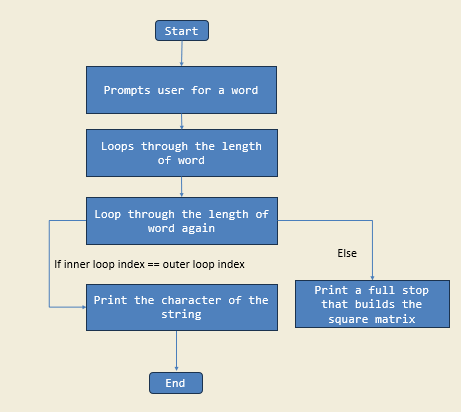
In this project, I learned how to create a program that takes in a user input for a choice of word and prints the word diagonally in a square matrix using a nested for loop concept.
Diagram:
Trinket:
Description:
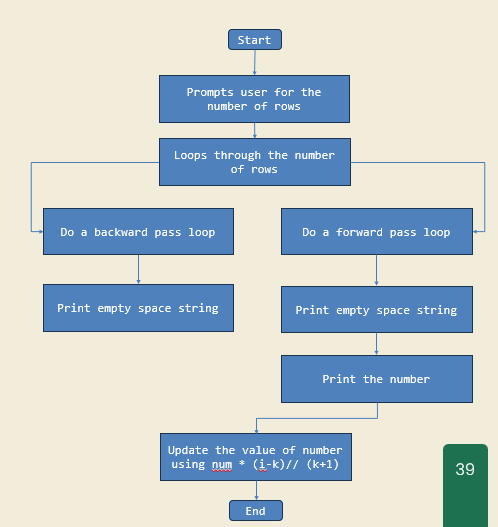
In this project, I created a program that uses nested loops concept to build a classic math triangle known where each number is the sum of the two numbers above it.
Diagram:
Trinket:
Description:
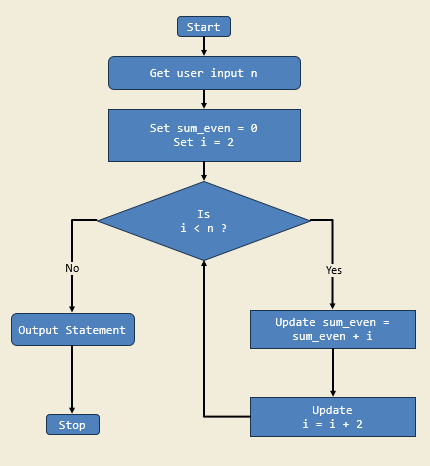
I have created a Python script named sum_of_my_even_numbers.py. It prompts me for a positive integer, and using a while loop, it calculates and displays the sum of all even numbers from 2 to the entered integer.
Diagram:
Trinket:
Description:
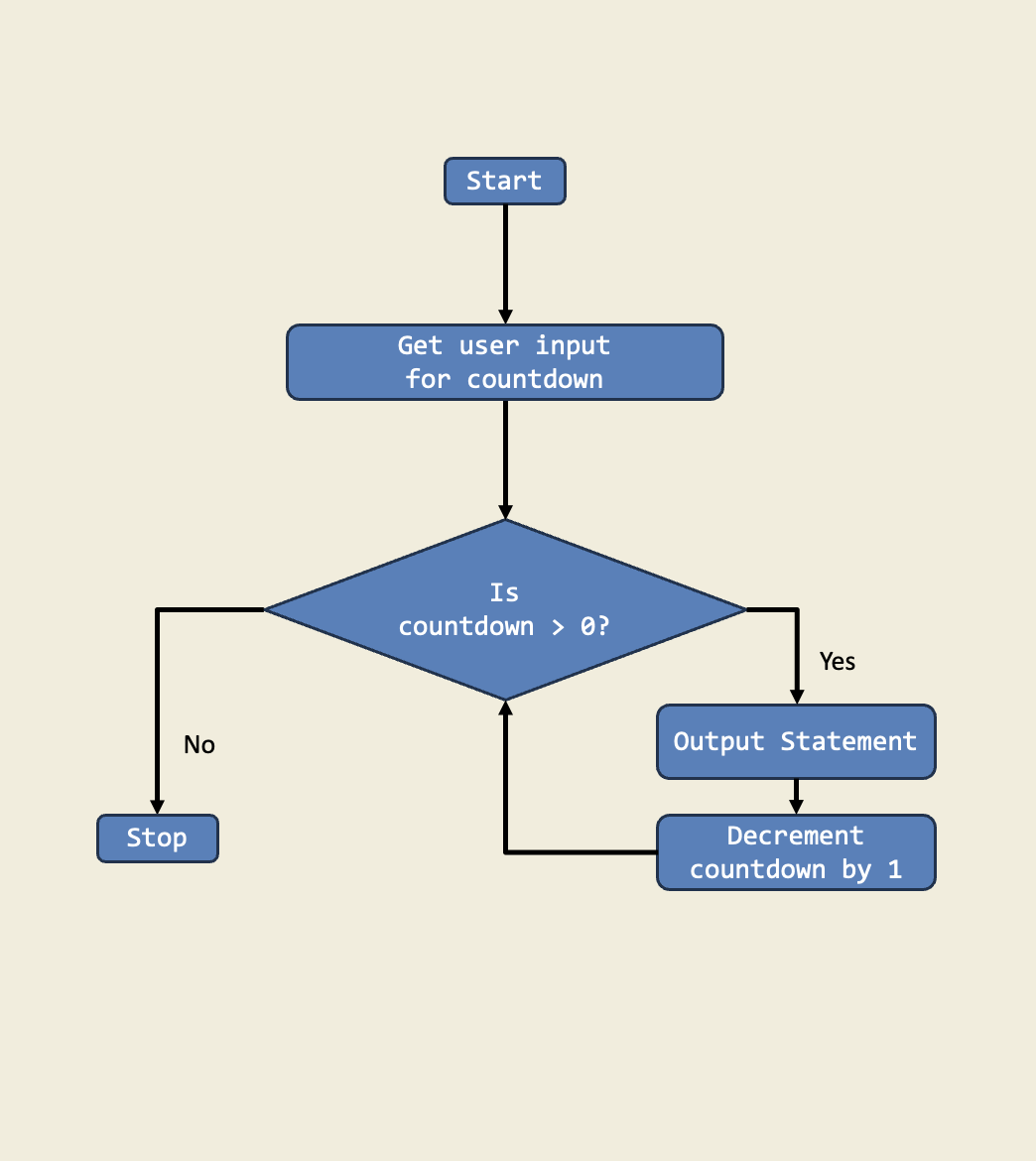
In this project, I built a countdown timer that uses a while loop to count down from a starting number until it reaches 1. This is important because it shows me how to repeat an action until a condition is met.
Diagram:
Trinket:
No other achievements listed yet.