Jayden's Coding Projects
My name is Jayden, and I am 12 years old this year. I started learning robotics with LEGO Mindstorms and block-based coding when I was in Primary 3. Since then, I’ve really enjoyed designing and building different types of robots and structures to automate simple, everyday tasks in my life. Learning robotics has helped me become a better problem solver by encouraging me to think both logically and creatively. It has also improved my focus, patience, and ability to work through challenges step by step. Through robotics, I’ve learned how to break down complex problems, test out different solutions, and keep improving my designs. Robotics also helps students like me develop important skills for the future, such as coding, teamwork, and critical thinking. It shows us how technology can be used to solve real-world problems and inspires us to be more innovative and curious about how things work. Most of all, robotics has made learning fun and exciting for me! I have documented my journey in robotics.
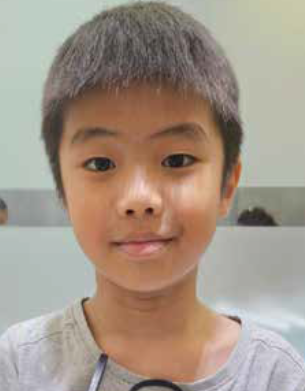
Bumper Car
I learned how to use LEGO Technic parts to design and build functional mechanical systems. By applying coding concepts such as conditionals (if-else) and integrating various sensors, I programmed my creations to respond dynamically to their environment. One example was a bumper car that automatically reverses when its front touch sensor detects a collision—mimicking real-world applications of obstacle detection used in autonomous vehicles and robotic systems to enhance safety and navigation.
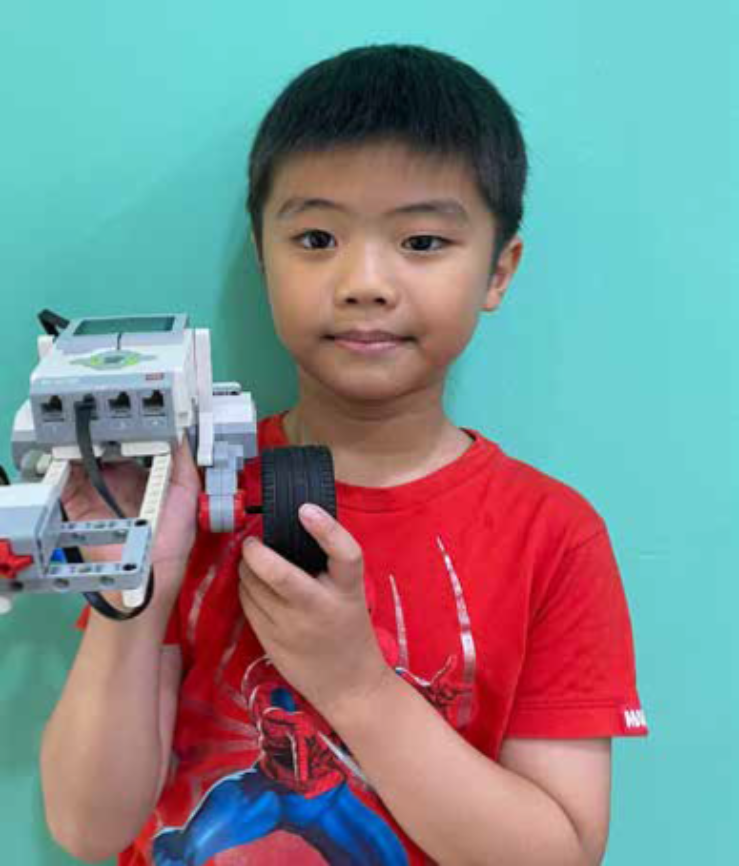
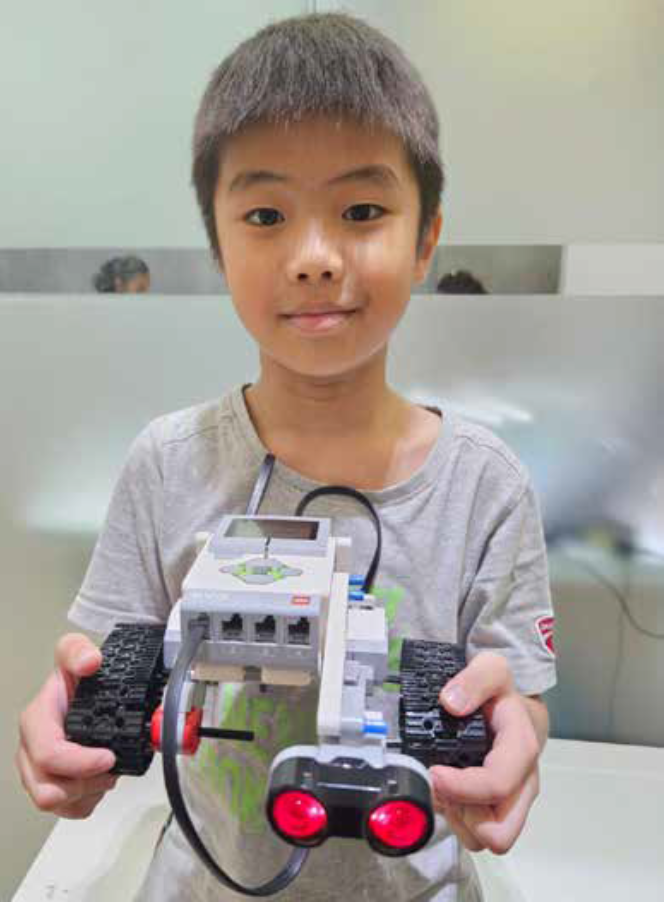
Ultrasonic Activated Tractor
I learned how to use LEGO Technic parts to design and build various mechanical structures. By applying coding concepts such as conditionals (if-else) and incorporating different sensors, I built a tractor. Using the ultrasonic sensor, the tractor moves when it detects the load on it. Such autonomous track-based vehicles are used to transport goods between different stations. Once the sensor detects the object, the vehicle automatically moves to deliver the item to the designated location. This automation reduces the need for human labor, increases efficiency, and ensures precise handling of materials.
3 – Colour Activated Shooter
Having played at the arcade frequently, I decided to use the concepts of conditional statements, colour detection and output controls to create a secure and precise shooter that fires a shot when the colour sensor detects 2 specific colours in the coded order. This project demonstrates how sensor integration and conditional logic can be used to develop automated systems, with potential applications in intelligent defense technologies.
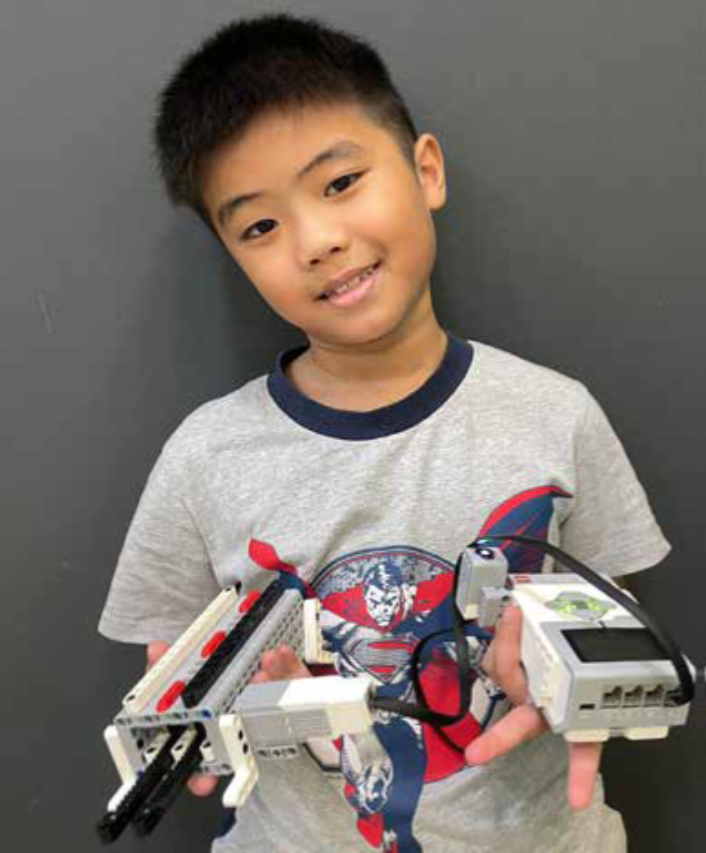
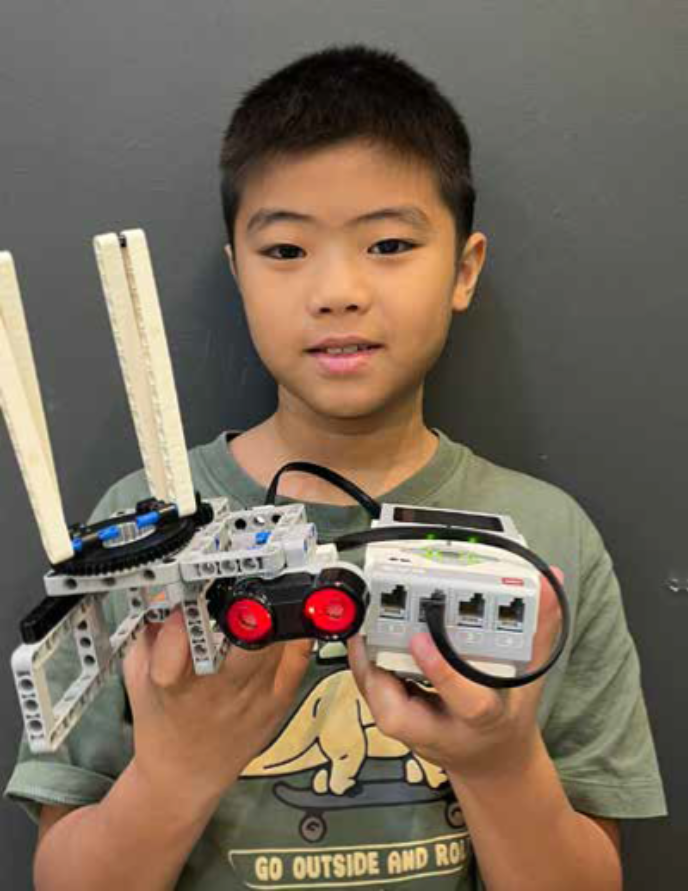
Touch activated Automated rabbit head
My younger siblings loved playing with their toy rabbit head, which spins when the wind hits it. They used to manually spin and stop it, which was fun but limited. To make it more interactive and engaging, I decided to create an automated version of the toy. In this upgraded version, the rabbit head starts spinning automatically as soon as the program runs. When the ultrasonic sensor detects someone nearby—such as a child approaching—the spinning stops, and the toy returns to its original position.