Calen's Coding Projects
My name is Calen and I am 12 years old this year. I started learning Python, a text-based coding language, when I was in Primary 3 because it is fun and easy to use. With Python, I can tell the computer what to do by writing instructions, solving math problems without using pen and paper. Python helps make tricky problems easier to solve and teaches me to think carefully and solve problems step by step, which is useful for all kinds of learning.

Description:
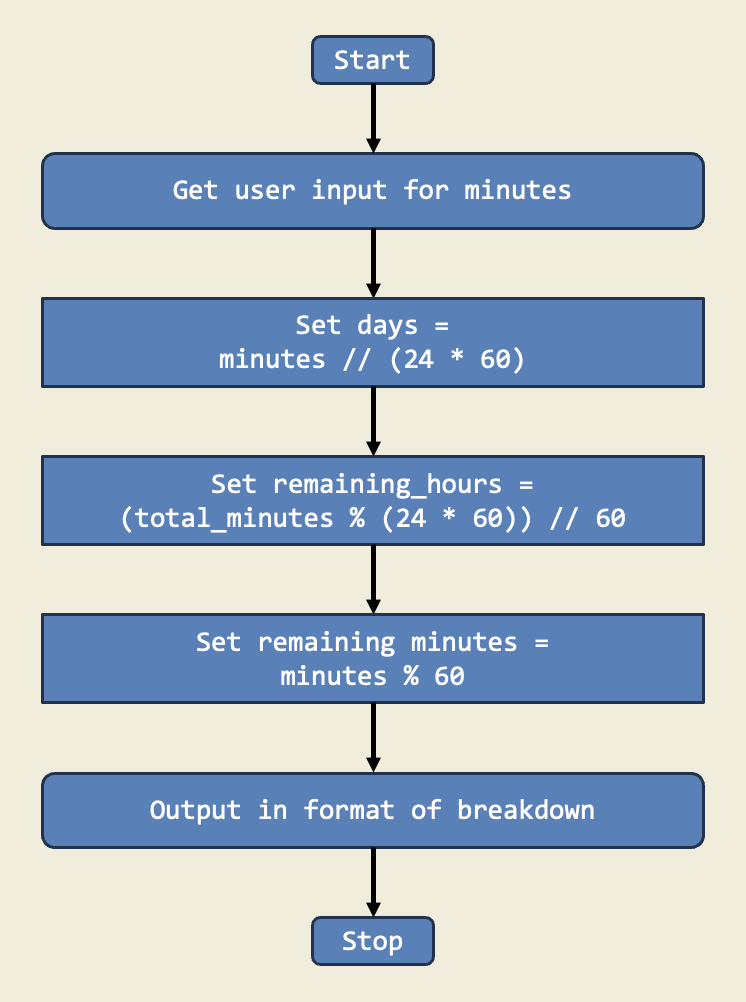
In this project, I used math to change a huge number of minutes into days, hours, and minutes. I used division and remainders to see how many full days there were and what was left over. This is important because it shows how math can help us understand time by breaking it down into parts we can read.
Diagram:
Trinket:
Description:
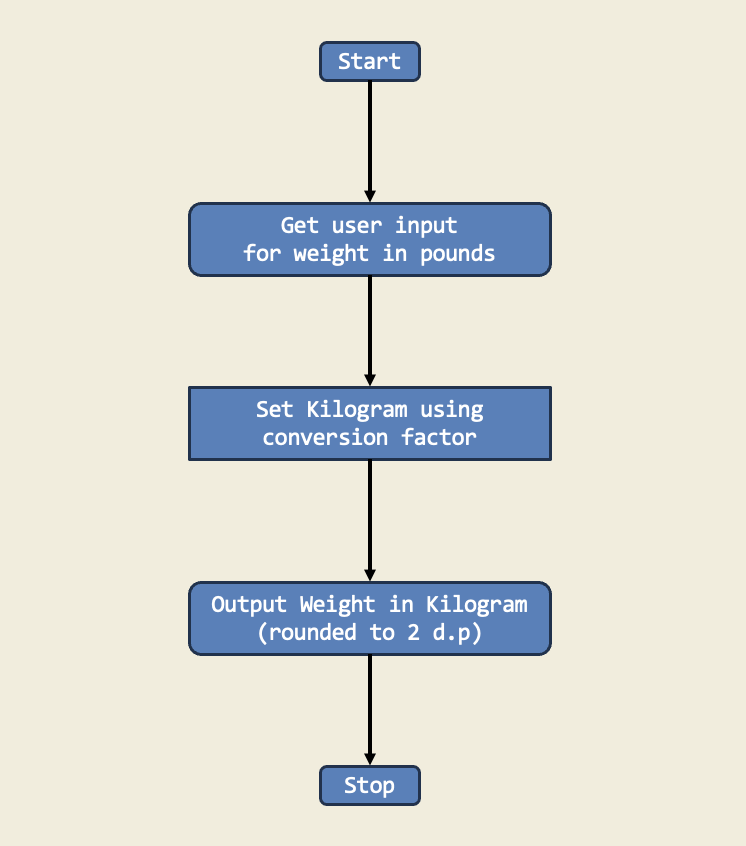
In this project, I learned how to convert weight from pounds to kilograms by multiplying by a conversion factor. This is important because it teaches us how to change one unit of measurement to another so we can compare different types of data.
Diagram:
Trinket:
Description:
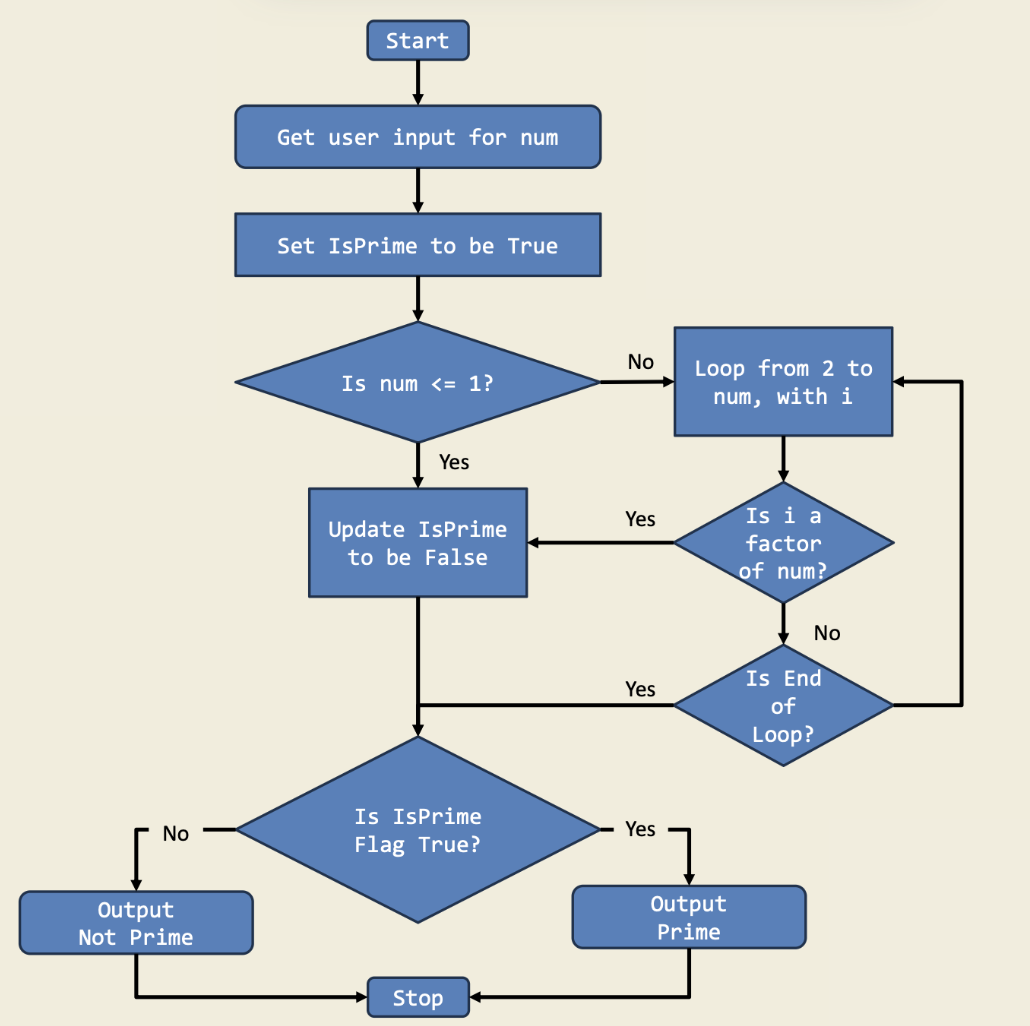
This game challenges you to decide if a number is prime by using if-else statements. It’s a fun way to reinforce the concept of prime numbers and divisibility in code.
Diagram:
Trinket:
Description:
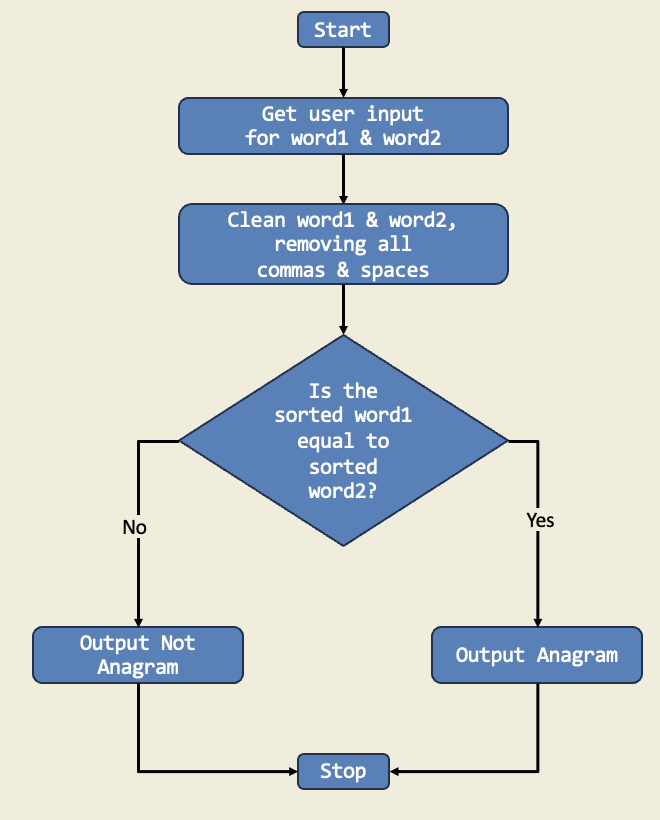
In a word game, players needed to determine whether two words were anagrams or not. I created a Python program named anagram_checker.py that takes in two user inputs for words and checked if the provided words were anagrams. An anagram is a word or phrase formed by rearranging the letters of a different word or phrase, typically using all the original letters exactly once.
Diagram:
Trinket:
Description:
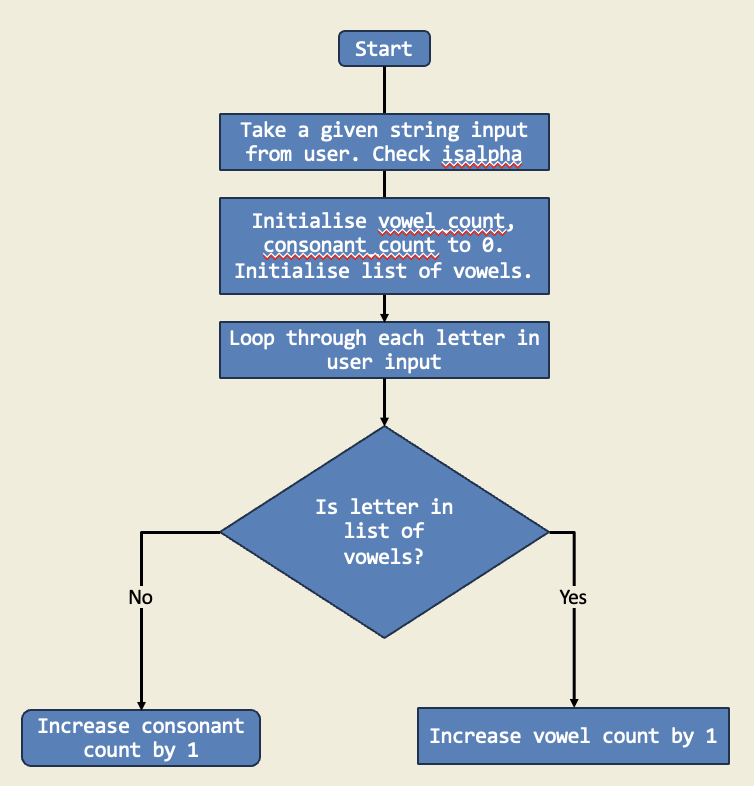
In this project, I used a for loop to count the number of vowels and consonants in a given string. The loop iterates through each character in the string, checking if it is a vowel or consonant, and updates the counts accordingly.
Diagram:
Trinket:
Description:
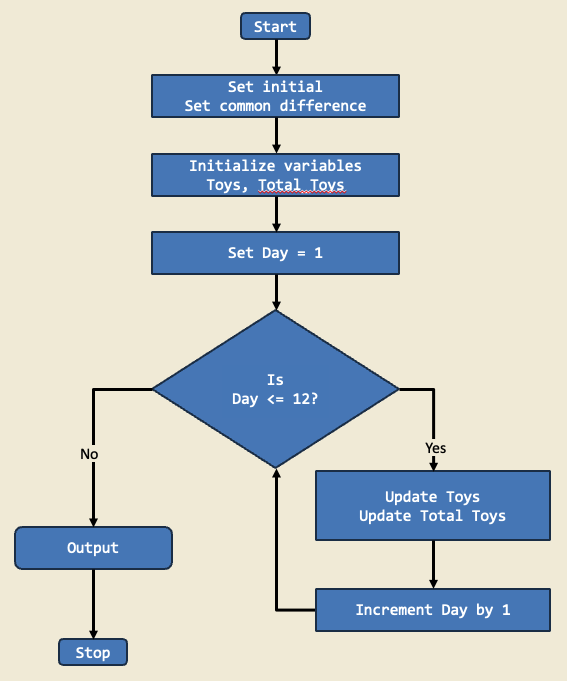
This project calculates the inventory of a toy store over 12 days. Starting with 25 toys, the stock increases by 3 each day. The code computes both the number of toys in stock on day 12 and the total toys accumulated over the 12 days. This demonstrates the use of variables, loops, and arithmetic operations to track and summarize inventory changes.
Diagram:
Trinket:
Description:
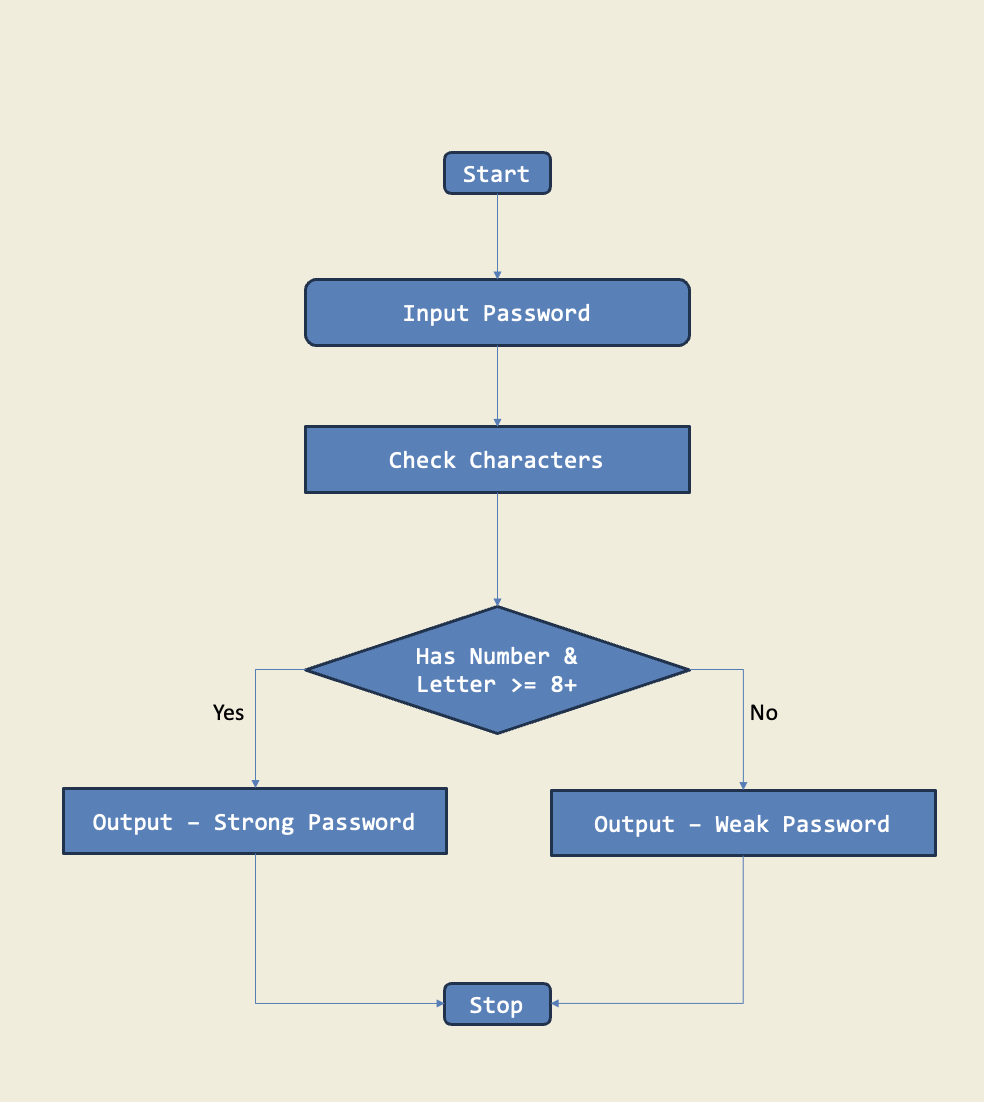
This project assesses the strength of a user-provided password based on criteria like length, presence of uppercase/lowercase letters, numbers, and symbols. It's a practical application of string methods and conditional statements to implement security principles.
Diagram:
Trinket:
Description:
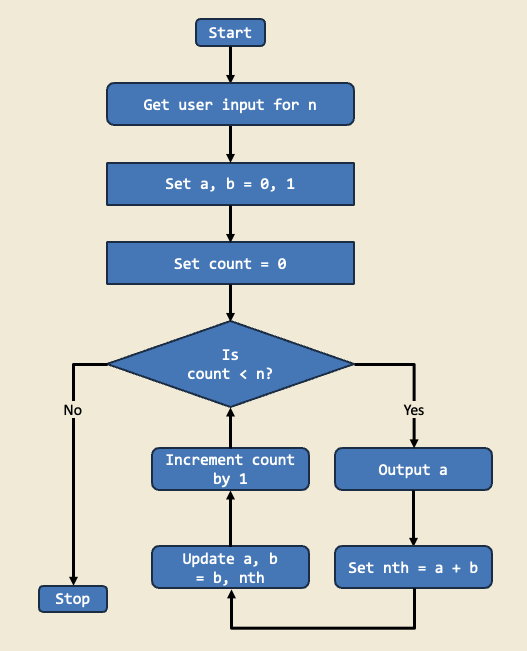
This project generates the Fibonacci sequence up to a specified number of terms. It demonstrates the use of loops and variables to calculate each term based on the sum of the two preceding numbers, a classic example in programming.
Diagram: